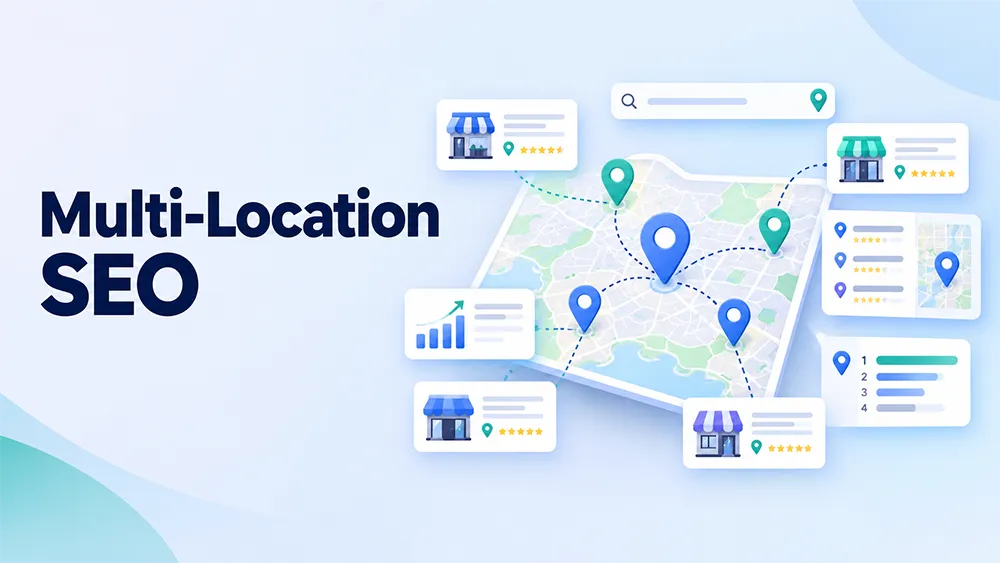
Multi-Location SEO helps businesses improve their visibility in local search results across multiple cities, regions, or service areas. For companies with several branches, a structured SEO strategy makes it easier for customers to discover the right location, explore available services, and get in touch.
Managing multiple locations requires careful planning. Each branch needs accurate business information, relevant local content, and a strong online presence. At the same time, the overall strategy must maintain brand consistency and avoid unnecessary duplication. The following strategies can help businesses manage local SEO effectively as they grow.
Key Strategies for Multi-Location SEO
A successful multi-location SEO strategy requires a clear plan to improve local visibility and reach customers in each target area.
1. Create Unique Location Landing Pages
Dedicated landing pages help search engines understand where a business operates and which branch serves a particular audience. Create a separate page for every important location rather than directing all local visitors to a single homepage.
Each page should include the branch address, contact number, opening hours, available services, and directions. Add relevant local details, such as nearby landmarks, service coverage, or location-specific facilities, where appropriate.
Avoid publishing identical pages with only city names changed. Unique, useful content gives visitors a reason to explore each page and helps distinguish individual branches.
A well-planned website structure is equally important when managing multiple location pages. Businesses should consider how to organise geographic pages at scale to maintain a clear site hierarchy, establish logical internal links, and prevent overlapping location content.
2. Target Location-Specific Keywords
Keyword research identifies the terms potential customers use when searching for local products and services. Search behaviour can differ between cities, so each branch should have a keyword strategy that reflects its market.
For example, a digital marketing company might target “SEO company in Chennai” for its Chennai branch and “SEO services in Kochi” for its Kochi location.
Use keyword research tools to discover relevant search terms, related queries, and local competition. Assign primary keywords to suitable landing pages and incorporate supporting terms naturally into headings, descriptions, and body content.
Avoid targeting the same primary keyword across multiple pages when each page serves a different location. A clear keyword map helps reduce overlap and keeps the content focused.
3. Optimise Google Business Profiles
Google Business Profiles help eligible businesses appear in local search results and Google Maps. Every eligible branch should have an accurate, properly maintained profile.
Complete essential details, including the business name, address, phone number, opening hours, website link, and relevant categories. Add genuine photos and update the profile whenever business information changes.
Link each profile to its corresponding location landing page. This gives customers direct access to branch-specific information and makes it easier to take the next step.
Businesses that visit customers at their locations should configure their profiles according to Google’s service-area guidelines. Accurate setup is essential for representing the business correctly.
4. Maintain Consistent NAP Information
NAP stands for name, address, and phone number. Consistency across business directories, websites, and other online listings helps customers identify the correct branch.
Create a central record containing verified details for every location. Use it when updating local directories, industry listings, social profiles, and other relevant platforms.
Regularly check for outdated addresses, incorrect phone numbers, duplicate listings, and old business names. Correct discrepancies and remove duplicates where appropriate.
As businesses expand, this process becomes particularly important because old information can remain online long after a branch has moved or closed.
5. Build Local Reviews and Backlinks
Customer reviews help potential buyers evaluate a business before making contact. Encourage genuine feedback after customer interactions and respond professionally to reviews across relevant platforms.
Monitor feedback for each branch to identify recurring concerns and opportunities to improve service quality. Never purchase reviews or offer incentives in exchange for positive ratings.
Local backlinks can also strengthen a website’s authority and relevance. Build relationships with reputable local organisations, business associations, industry publications, and community groups. Relevant sponsorships, useful local resources, and genuine business collaborations can create legitimate linking opportunities.
Focus on relevance and credibility instead of collecting links from unrelated websites.
6. Implement Local Business Schema
Structured data helps search engines interpret information on a webpage. Appropriate LocalBusiness schema can describe important details about individual business locations.
Depending on the business and schema type, relevant information may include the location name, address, telephone number, and opening hours.
Add suitable markup to location pages and ensure that it matches the visible information on the website. Validate the implementation using Google’s testing tools and correct any errors.
Structured data does not guarantee higher rankings, but accurate markup can help search engines understand the information associated with each branch.
7. Track SEO Performance by Location
Measuring results separately helps businesses identify which branches attract visitors and generate enquiries. Overall website traffic alone may hide differences in local performance.
Use Google Search Console to monitor search queries, clicks, impressions, and location-page performance. Google Analytics can help measure engagement and conversions, including contact form submissions and appointment requests.
Review available Google Business Profile performance data to understand customer interactions, such as calls and direction requests.
Compare locations based on their search demand, competition, and business goals. Use the findings to improve underperforming pages, refine keyword targeting, and prioritise branches with the greatest growth potential.
8. Establish a Scalable SEO Workflow
Managing several locations becomes more complex as a business expands. Standardised processes help maintain accuracy without making every task dependent on manual work.
Create a checklist for launching new location pages, updating business profiles, checking directory listings, monitoring reviews, and reviewing performance. Assign clear responsibilities to team members and maintain a central database of location details.
SEO tools can support keyword research, listing management, backlink analysis, and reporting. However, local content should still be reviewed to ensure it reflects the services and needs of each market.
Review the workflow regularly and update it whenever the business opens a branch, changes its services, or enters a new region.
Conclusion: Build a Stronger Multi-Location SEO Strategy
Multi-Location SEO requires a balance between consistent brand management and location-specific optimisation. Unique landing pages, relevant local keywords, accurate Google Business Profiles, consistent business listings, genuine reviews, and performance tracking help businesses strengthen their presence in local search.
Establishing repeatable processes makes these activities easier to manage as the business grows. By reviewing results regularly and improving each location according to its audience and market, businesses can build a more sustainable local search presence.
Looking for a Reliable SEO Company to Grow Your Business Reach?
WebDesignCochin is one of the best SEO companies in Kochi, helping businesses strengthen their search presence across multiple locations. Our SEO services focus on improving local rankings and connecting your business with relevant audiences. Reach out to us to discuss your multi-location SEO needs and find the right strategy for your business.