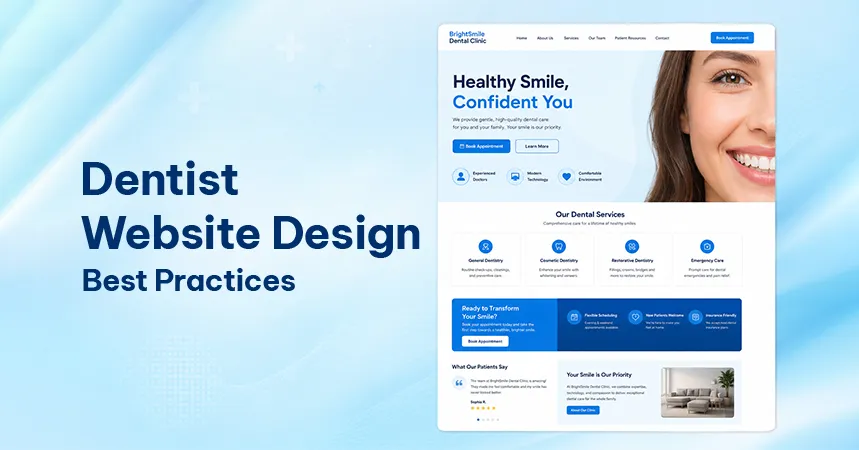
Effective dentist website design is essential for converting online visitors into loyal patients. This ultimate guide covers the top best practices every modern dental practice needs to succeed in a competitive digital market.
This guide explores key strategies including mobile optimization, clear call-to-action buttons, local search engine optimization, fast page speed, and trust-building elements like patient reviews and smile galleries.
Whether you want to refresh an existing site or build a brand-new platform from scratch, these actionable insights will help you create a highly functional, visually appealing website that attracts target patients, ranks well on search engines, and drives consistent business growth.
Why Dental Clinic Website Design Matters
A modern website serves as the digital front door to your practice, shaping how potential patients perceive your care before they ever step through your doors.
Creates a Strong First Impression
First impressions happen in milliseconds online. When a user visits your site, the layout, color scheme, and typography immediately set the tone. A clean, modern site reassures visitors that your clinical technology and patient care are equally up to date.
Builds Trust and Professional Credibility
Patients often feel anxious about visiting the dentist. A clear, professional web presence demonstrates legitimacy. Displaying your licenses, team credentials, affiliations, and clean facility photos eases anxiety and builds immediate trust.
Increases Appointment Bookings
A well-structured site makes scheduling seamless. By reducing the friction involved in booking, you turn casual online visitors into confirmed real-world appointments without requiring extra work from your front desk staff.
Improves Local SEO Visibility
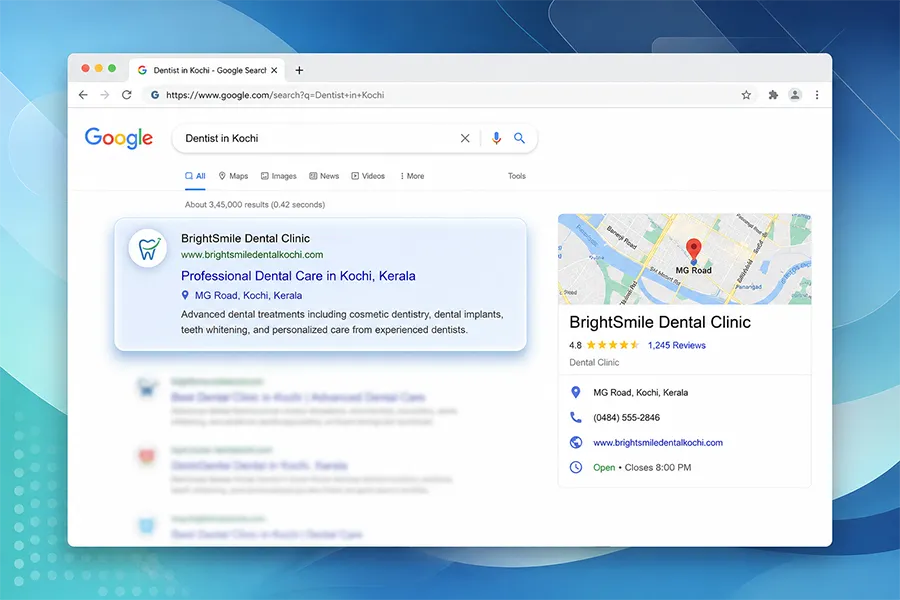
Effective dental clinic website design helps your practice show up when local patients search for care. Proper site structure, localized content, and technical optimization ensure search engines understand your geographic service area and display your practice prominently.
Provides a Better Mobile Experience
Most healthcare searches happen on smartphones while people are on the go. A mobile-optimized site adjusts automatically to any screen size. This provides smooth navigation, easy-to-read text, and quick click-to-call buttons for mobile users.
Educates Patients About Treatments
Patients want to understand their treatment options clearly. Your website acts as an educational hub, explaining procedures like teeth whitening, dental implants, or root canals in plain language so patients feel confident about booking a consultation.
Highlights Reviews, Certifications, and Before & After Results
Social proof is a powerful decision-making factor for patients. Showcasing real patient testimonials, star ratings, professional awards, and clear before-and-after photo galleries gives prospective patients concrete proof of your high-quality results.
Dental Website Design Tips
A well-planned website can help your dental practice attract more visitors, improve patient experience, and increase appointment bookings. The following dental website design ideas will help you create a modern, user-friendly website that supports both your patients and your business goals.
Use a Clean and Professional Layout
A clean layout helps visitors find important information without feeling overwhelmed. Use a simple navigation menu, consistent colors, readable fonts, and enough white space to create a comfortable browsing experience.
Organize your homepage so patients can quickly access your services, contact details, appointment booking options, and testimonials. A professional layout reflects the quality of your dental practice and encourages visitors to stay on your website longer.
Optimize the Dental Website for Local SEO
Local SEO helps your dental practice appear when nearby patients search for a dentist online. Display your clinic’s name, address, phone number, business hours, and Google Maps location consistently across your website.
Create location-specific pages if you serve multiple areas and optimize them with relevant local keywords. Combining a well-structured website with dental SEO services can improve local search visibility, increase organic traffic, and generate more appointment enquiries.
Add Online Appointment Booking
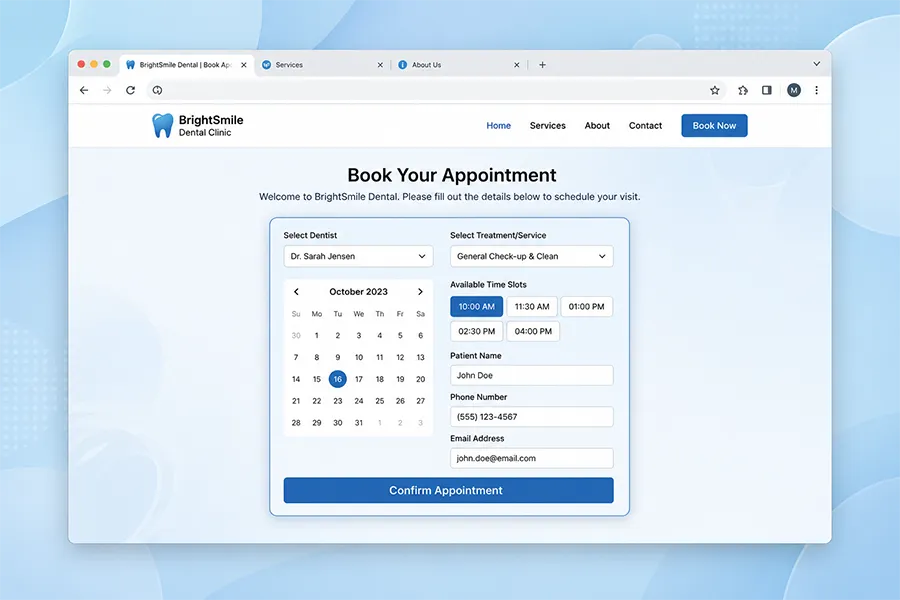
Patients appreciate the convenience of scheduling appointments online without making a phone call. A simple booking system allows visitors to choose a suitable date and time in just a few clicks.
Place appointment buttons on important pages such as the homepage, service pages, and contact page. A streamlined booking process reduces friction and helps convert more website visitors into patients.
Showcase Before-and-After Smile Galleries
Before-and-after galleries allow prospective patients to see the quality of your work. Display high-quality images for treatments such as teeth whitening, dental implants, veneers, or orthodontics with proper patient consent.
Organize the gallery by treatment type so visitors can easily browse different procedures. Real treatment results build confidence and help patients understand what they can expect.
Feature Patient Testimonials
Patient testimonials provide valuable social proof that helps build trust with new visitors. Display genuine reviews throughout your website instead of placing them on a single page.
Include names, photos, or links to verified review platforms whenever possible. Positive feedback from satisfied patients reassures visitors and encourages them to schedule an appointment with confidence.
Create Individual Service Pages
Each dental service should have its own dedicated page with detailed information. Explain the procedure, benefits, treatment process, recovery time, and frequently asked questions in simple language.
Individual service pages improve the user experience while helping search engines understand the topics covered on your website. They also increase the chances of ranking for specific dental treatments.
Display Dentist Profiles and Qualifications
Patients want to know who will be treating them before booking an appointment. Create detailed profiles for each dentist that include qualifications, experience, areas of expertise, certifications, and professional memberships.
Add friendly professional photographs to make your team more approachable. These profiles build credibility and help patients feel comfortable choosing your clinic.
Use High-Quality Clinic Photography
Professional photographs give visitors a realistic view of your clinic and create a stronger connection than generic stock images. Showcase your reception area, treatment rooms, equipment, and dental team using high-resolution images.
Authentic photography reflects transparency and professionalism while helping patients feel more familiar with your practice before their visit.
Make Contact Information Easy to Find
Patients should be able to contact your clinic without searching through multiple pages. Display your phone number, email address, clinic address, and business hours prominently in the header, footer, and contact page.
Include a clickable phone number for mobile users and an embedded Google Map to help patients find your location easily. Clear contact information encourages more inquiries and appointment bookings.
Add Emergency Dental Call-to-Action
Many people search online when they need urgent dental care, so your website should clearly highlight emergency services. Use noticeable call-to-action buttons that encourage visitors to call your clinic immediately during emergencies. If you offer same-day appointments or extended hours, mention these prominently. Easy access to emergency contact information improves the patient experience during stressful situations.
Improve Website Loading Speed
A slow website can frustrate visitors and increase bounce rates. Compress images, optimize your website code, and choose reliable hosting to improve loading speed.
Avoid unnecessary animations or oversized files that delay page loading. A faster website provides a better user experience and supports higher rankings in search engine results.
Design for Mobile-First Users
Most patients browse dental websites on smartphones, making mobile responsiveness essential. Ensure your website adapts smoothly to different screen sizes with easy navigation, readable text, and touch-friendly buttons.
Forms should be simple to complete, and important information should remain accessible on smaller screens. A mobile-friendly website improves both user satisfaction and search engine performance.
Include FAQs and Patient Resources
Answering common patient questions helps visitors make informed decisions before contacting your clinic. Include a frequently asked questions section covering treatments, insurance, payment options, appointment preparation, and aftercare instructions.
Educational blogs and patient guides also provide additional value while supporting your website’s SEO performance and authority.
Use Clear Calls-to-Action Throughout the Website
Every page should encourage visitors to take the next step, whether it is booking an appointment, requesting a consultation, or contacting your clinic. Use clear, action-oriented buttons that stand out visually without being distracting.
Position these calls-to-action naturally throughout the website so patients always know what to do next, helping improve conversion rates and generate more appointments.
Dental Website Examples
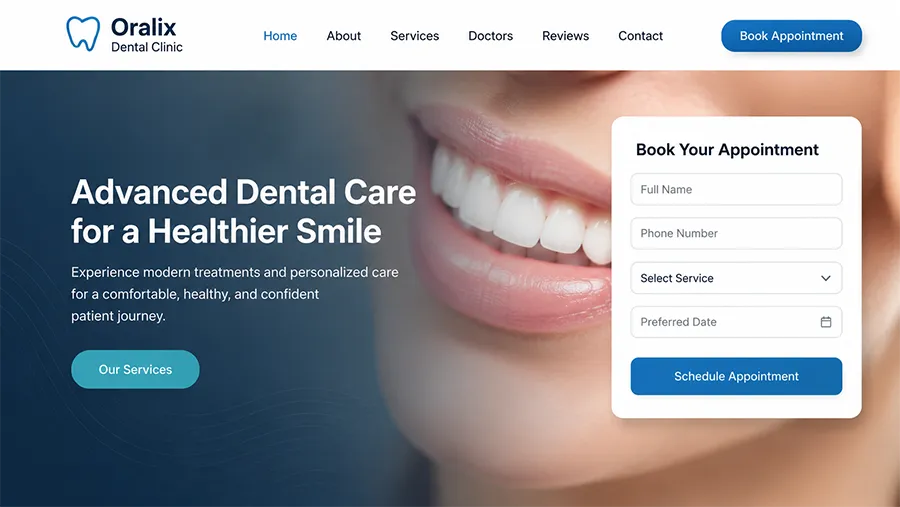
A well-designed dental website combines attractive visuals, easy navigation, useful information, and patient-focused features. Successful examples usually include clear service pages, online appointment options, dentist profiles, patient reviews, and strong calls-to-action.
Different dental practices may use different design approaches based on their services and target audience. The following sample designs showcase how modern dental websites can be structured to create a professional online presence and improve patient engagement.
Signs It's Time to Redesign Your Dental Clinic Website
An outdated website can affect your clinic’s credibility, user experience, and ability to attract new patients. The following signs indicate that your dental website may need a redesign.
Your Website Looks Outdated
A website that looks old or visually inconsistent can create a negative impression among potential patients. Modern users expect clean layouts, professional visuals, and easy navigation when searching for healthcare services.
If your website uses outdated designs, old images, or complicated menus, it may make visitors question the quality of your clinic. A refreshed design can improve credibility and create a better first impression.
It Isn’t Mobile-Friendly
Many patients search for dental services using smartphones. If your website does not adjust properly to different screen sizes, visitors may struggle to read content, fill out forms, or find contact details.
A mobile-friendly website provides a smoother experience with responsive layouts, easy navigation, and accessible appointment options. Updating your website for mobile users can help retain visitors and increase enquiries.
Pages Load Too Slowly
Slow-loading pages can frustrate visitors and cause them to leave before exploring your services. Large images, outdated technology, and poor website optimization are common reasons for slow performance.
A redesigned website can improve loading speed through optimized images, better coding practices, and modern hosting solutions. Faster pages create a better user experience and support improved search engine performance.
You’re Not Getting Enough Appointment Requests
A website should help generate new patient enquiries, not just provide information. If visitors are leaving without contacting your clinic, the website may lack clear calls-to-action, easy booking options, or persuasive content.
A redesign can improve conversion elements by making appointment buttons more visible, simplifying contact forms, and highlighting your services effectively.
Patients Can’t Find Important Information Easily
Visitors should be able to quickly find details about treatments, pricing information, clinic location, dentist profiles, and contact options. Poor navigation or confusing page structures can make it difficult for patients to get the answers they need.
A redesigned website with clear menus and organized content improves usability and helps visitors find relevant information faster.
Your Website Doesn’t Rank Well on Google
A website that does not appear in search results can limit your ability to reach new patients. Technical issues, outdated content, poor keyword optimization, and weak local SEO can affect rankings.
Updating your website with SEO-friendly content, optimized pages, and improved technical performance can increase visibility and help attract more organic traffic.
Updating Content Is Difficult
Dental practices need to update information regularly, such as services, dentist profiles, treatment details, and blog content.
If your current website makes simple updates complicated or requires technical assistance for every change, it may be time for a redesign. A modern content management system makes it easier to maintain fresh and accurate information.
Your Competitors Have Better Websites
Patients often compare multiple dental clinics before making a decision. If competing practices have more modern websites, better visuals, online booking features, or stronger content, your clinic may lose potential patients.
A redesigned website can help your practice stand out by showcasing your expertise, services, and unique value.
Should You Hire a Professional Web Design Company for Dentist Websites?
Building a successful dental website requires more than choosing an attractive template. Professional planning, design experience, SEO knowledge, and technical expertise are important for creating a website that supports your clinic’s goals.
Benefits of Working with Professionals
A professional web design team understands how to create websites that balance aesthetics, functionality, and user experience.
They can develop a structure that helps patients find information easily while improving conversion opportunities.
Professional designers can also implement features such as appointment booking systems, mobile optimization, SEO-friendly layouts, and secure website solutions that support long-term growth.
DIY vs Professional Dental Website Design
DIY website builders may seem like an affordable option, but they often come with limitations in customization, performance, and scalability.
A professionally designed website provides a unique layout, better user experience, and advanced features tailored to your dental practice.
While DIY solutions may work for basic needs, professional dental clinic web design offers greater flexibility and a more effective online presence.
What to Look for in a Dental Website Design Company
Choose a company that understands the requirements of healthcare websites and has experience creating websites for dental practices.
Review their portfolio, evaluate their design approach, and check whether they provide services such as SEO optimization, mobile-friendly development, and ongoing support.
A reliable company should focus on creating a website that attracts patients and supports your business objectives.
Questions to Ask Before Hiring
Before selecting a web design company, ask about their experience with dental websites, development process, estimated timeline, pricing structure, and post-launch support.
It is also important to understand how they handle SEO, website security, content updates, and performance optimization.
Asking the right questions helps ensure the website project meets your expectations and delivers long-term value.
Final Thoughts on Dentist Website Design Best Practices
Following modern dentist website design best practices helps dental practices create a strong online presence and connect with more potential patients. A professional website should combine attractive design, useful content, simple navigation, and patient-focused features to build trust and encourage visitors to take action.
A well-designed, SEO-friendly, and mobile-responsive website can improve search visibility, attract more patients, and increase appointment bookings. From local SEO and fast loading speeds to testimonials and online scheduling, every element contributes to a better digital experience.
Investing in professional website design helps dental practices build a reliable online foundation that supports long-term growth and keeps them competitive in an increasingly digital healthcare market.
Need a Modern Website for Your Dental Practice?
We are a leading website design company in Kochi, creating professional and user-friendly websites for businesses across different industries. Our team helps dental clinics build modern websites with responsive designs, SEO-friendly structures, appointment features, and patient-focused experiences. Get in touch with us to create a website that helps your dental practice attract more patients and grow online.
FAQs About Dentist Website Design
A dental website should provide clear information, build patient trust, and make it easy for visitors to contact the clinic. Here are answers to some common questions about dental website design.
How much does dentist website design cost?
The cost of dentist website design depends on the type of website a dental practice needs. Simple websites with basic features have lower costs, while customized websites with advanced functionality require a higher budget. Design, features, content, and maintenance needs affect the overall investment.
What should a dental website include?
A dental website should include essential information such as clinic details, dentist profiles, treatment pages, contact information, appointment booking options, patient testimonials, and frequently asked questions. It should also have a mobile-friendly design, fast loading speed, and clear calls-to-action to help visitors easily find information and schedule appointments.
How often should a dental clinic redesign its website?
A dental clinic should consider redesigning its website every few years or whenever it no longer meets current user expectations. A redesign may be needed if the website looks outdated, performs poorly on mobile devices, loads slowly, has outdated content, or fails to generate enough patient enquiries.
How can a dental website rank higher on Google?
A dental website can improve its Google rankings by creating high-quality content, optimizing service pages with relevant keywords, improving website speed, building local SEO signals, maintaining an updated Google Business Profile, and earning positive patient reviews. A technically optimized website with useful information provides a better experience for both users and search engines.