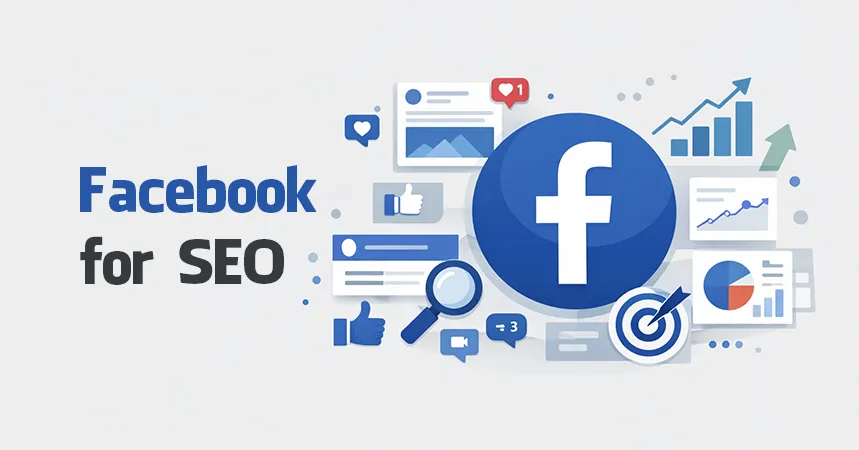
Facebook for SEO has become an increasingly important part of that broader marketing strategy because improving organic visibility today requires more than technical website fixes and keyword placement.
Social platforms influence how content is discovered, shared, and referenced across the web. If you want to understand the deeper relationship between social signals and search visibility, you can explore Social Media in SEO: How Social Engagement Influences Organic Search early in your research journey.
Facebook does not directly control Google’s algorithm. However, it strongly influences brand awareness, referral traffic, content distribution, and backlink opportunities. That is where its real SEO value lies.
In this guide, you will learn practical, actionable strategies to strengthen your Facebook SEO approach, optimize your page for discoverability, improve engagement signals, and use Facebook strategically to support your broader search engine performance.
Facebook for SEO Strategies to Boost Search Rankings
Effective search engine optimization for Facebook page begins with structured planning and consistent execution. The strategies below are designed to help businesses strengthen visibility, increase referral traffic, and improve brand signals that indirectly support organic rankings.
1. Optimize Your Facebook Page for Search
Your Facebook page is often one of the first branded results that appears in search engines. Proper Facebook page optimization ensures both users and search engines clearly understand your business.
Focus on the following:
- Use primary keywords in your page name and description: Include your core service keywords naturally in your page description. Avoid stuffing phrases, but clearly explain what your business offers. This helps both Facebook’s internal search and external search engines.
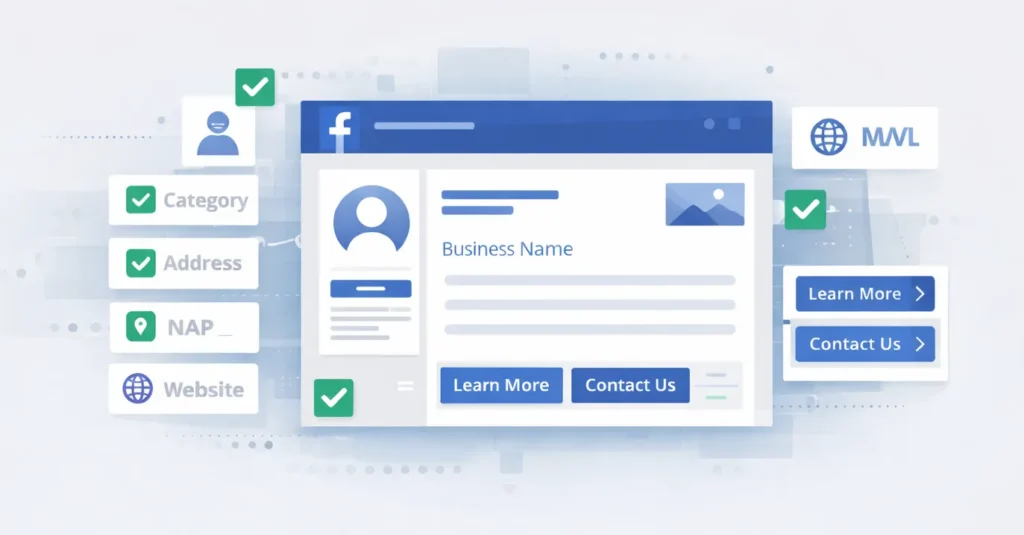
- Complete all business details: Fill out every available section: category, address, phone number, website, services, and operating hours. Incomplete profiles appear less credible and reduce visibility.
- Add website link and call-to-action buttons: Linking your website strengthens referral pathways and supports traffic flow. Use CTA buttons such as “Learn More,” “Book Now,” or “Contact Us” to guide user behavior.
- Maintain consistent NAP information: Your Name, Address, and Phone number must match your website and other listings. Consistency strengthens local SEO signals.
A strong Facebook page can also highlight your collaboration with trusted social media marketing agencies, which adds credibility and reinforces your brand’s authority online.
2. Use Keyword-Optimized Posts
Publishing content without optimization limits its reach. Strategic FB SEO requires keyword alignment within your posts.
Key steps include:
- Add relevant keywords naturally in captions: Include your target phrases in a conversational tone. For example, if you are promoting a blog about technical SEO, incorporate variations naturally in the post description.
- Optimize image descriptions: Facebook reads image descriptions and contextual cues. Add clear, keyword-relevant text in captions to improve internal search visibility.
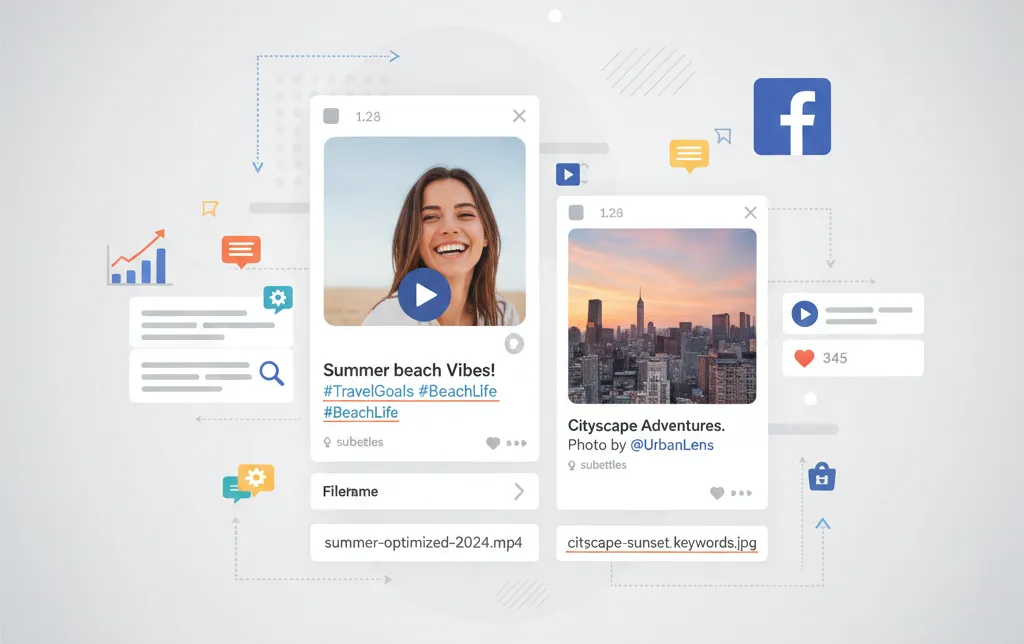
- Use strategic hashtags: Avoid clutter. Use a few relevant hashtags aligned with your topic and industry to improve discoverability within Facebook search.
- Align posts with search intent: Think about what users are looking for. Educational posts, how-to guides, and solution-based content attract higher engagement and sharing.
Consistent keyword usage across posts strengthens topical relevance and supports broader digital visibility.
3. Share High-Quality Website Content Regularly
One of the strongest ways Facebook supports SEO is by distributing your website content to a broader audience.
Consider these best practices:
- Promote blog posts consistently: Each new article should be shared with context. Write a compelling introduction that encourages users to click.
- Drive traffic to SEO-focused pages: Share pillar pages, service pages, and cornerstone content. This increases referral sessions and user engagement metrics.
- Repurpose long-form content: Break detailed guides into short posts, infographics, quote cards, or short videos that link back to the original page.
- Encourage click-through behavior: Use curiosity-driven captions and clear value statements to motivate users to visit your website.
Increased referral traffic may not directly alter rankings, but it improves exposure, engagement, and the likelihood of backlinks.
4. Build Backlink Opportunities Through Content Distribution
Backlinks remain one of the strongest ranking factors. Facebook helps amplify content visibility, increasing the chance of earning links.
To maximize impact:
- Increase content visibility: The more exposure your content gets, the more opportunities it has to be discovered by bloggers and journalists.
- Attract bloggers and publishers: Share data-driven posts, research findings, or industry insights. Valuable content is more likely to be cited.
- Encourage social sharing: Ask your audience to share helpful resources. Expanded reach increases link potential.
- Improve content discovery: Public posts are indexed by search engines. This improves the likelihood of appearing in branded and topical searches.
Content distribution through Facebook supports link-building efforts over time.
5. Leverage Facebook Groups for Niche Authority
Facebook Groups are powerful environments for building expertise and authority.
Use them strategically:
- Participate in industry groups: Join groups relevant to your niche and engage consistently.
- Share helpful resources: Provide guides, checklists, and insights rather than promotional material.
- Answer questions with value-driven responses: Detailed answers build credibility and encourage profile visits.
- Position your brand as an expert: When users repeatedly see valuable insights from your brand, authority perception increases.
Authority perception often leads to branded searches, which strengthen overall SEO performance.
6. Encourage Engagement to Improve Content Signals
Engagement strengthens content reach and visibility within Facebook’s algorithm.
Increase interaction by:
- Driving comments and shares: Invite opinions and feedback.
- Asking questions in posts: Open-ended questions encourage conversation.
- Running interactive polls: Polls generate quick engagement and extend reach.
- Creating conversation-driven content: Share insights that spark thoughtful discussion.
High engagement expands reach, which increases traffic opportunities and content exposure.
7. Optimize Facebook Images and Videos
Visual content significantly increases reach and engagement.
Strengthen your approach with:
- Descriptive file names before upload: Name image files with relevant keywords before uploading them.
- Keyword-rich captions: Describe what the visual represents using natural keyword placement.
- Subtitles in videos: Captions improve accessibility and increase watch time.
- Well-branded visuals: Consistent colors, logos, and typography improve recognition.
Improved watch time and engagement strengthen overall content performance.
8. Maintain Consistent Branding Across Platforms
Consistency reinforces trust and recognition.
Ensure alignment by:
- Aligning messaging with website content: Use similar value propositions and terminology.
- Using consistent business information: Maintain uniform contact details everywhere.
- Strengthening brand search signals: Encourage branded searches through recognizable messaging.
- Improving trust and credibility: Professional presentation across platforms supports user confidence.
Brand consistency improves authority perception and supports organic visibility.
9. Use Facebook Ads to Amplify SEO Content
Paid promotion can extend organic SEO efforts.
Strategic tactics include:
- Promoting high-performing blog posts: Amplify content that already shows strong engagement.
- Driving traffic to pillar pages: Guide users toward in-depth resources.
- Increasing dwell time and engagement: High-quality traffic can improve on-site behavior metrics.
- Supporting content distribution: Ads help new content gain initial traction.
A paid boost can accelerate content exposure and indirectly support SEO goals.
10. Track Performance and Adjust Strategy
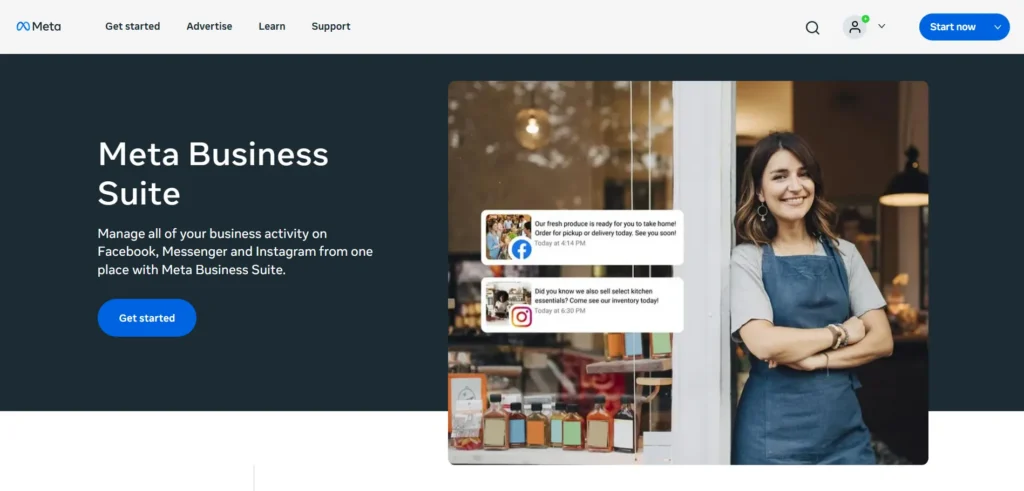
Without tracking, optimization becomes guesswork. To make informed decisions, use Meta Business Suite, Facebook’s native analytics platform, to monitor and analyze performance. Key steps include:
- Tracking referral traffic in analytics: Use Meta Business Suite to measure sessions, clicks, and website referrals originating from Facebook posts and ads.
- Monitoring engagement metrics: Evaluate likes, comments, shares, video views, and click-through rates to understand what content resonates with your audience.
- Identifying top-performing content: Analyze which posts, videos, or campaigns generate the most interaction and referral traffic, helping you prioritize high-impact topics.
- Optimizing based on data: Use insights from Meta Business Suite to refine your content strategy, post timing, and media type for maximum engagement and reach.
Using Meta Business Suite or a similar Facebook analytics tool ensures you can track performance, measure ROI, and continually improve your Facebook SEO and content optimization efforts.
Before finalizing your strategy, it is worth revisiting how social engagement impacts organic rankings and understanding the broader connection between social signals and search performance through this detailed guide on how social interaction shapes search visibility: learn how social engagement influences organic search performance.
Summary of Facebook for SEO
Facebook is more than a social networking platform; it is a powerful content distribution and brand visibility channel that supports long-term search growth. From optimizing your page details to publishing keyword-aligned posts and amplifying content strategically, every action contributes to stronger online presence.
While it does not directly change search engine algorithms, consistent Facebook SEO efforts increase brand awareness, referral traffic, backlink opportunities, and engagement signals. These factors collectively strengthen your overall digital footprint.
A sustainable strategy requires tracking performance, refining content, and maintaining consistent branding. When integrated properly into your broader digital marketing plan, Facebook for SEO becomes a practical, measurable way to enhance search visibility and drive meaningful organic growth over time.